publications
Research in human-centered computing, human-AI collaboration, and visual analytics.
* indicates authors who contributed equally to this research.
2026
- IUISCSimulator: An Exploratory Visual Analytics Framework for Partner Selection in Supply Chains through LLM-driven Multi-Agent SimulationShenghan Gao, Junye Wang*, Junjie Xiong*, Yun Jiang, Yun Fang, Qifan Hu, Baolong Liu, and Quan LiIn Proceedings of the 31st International Conference on Intelligent User Interfaces, , 2026
Supply chains (SCs), complex networks spanning from raw material acquisition to product delivery, with enterprises as interconnected nodes, play a pivotal role in organizational success. However, optimizing SCs remains challenging, particularly in partner selection, a key bottleneck shaped by both competitive and cooperative dynamics. This challenge inherently constitutes a multi-objective dynamic game requiring a synergistic integration of Multi-Criteria Decision-Making (MCDM) and Game Theory (GT). Traditional approaches, grounded in mathematical simplifications and managerial heuristics, often fail to capture real-world intricacies and risk introducing subjective biases. Multi-agent simulation (MAS) offers promise, but prior research has largely relied on fixed, uniform agent logic, limiting practical applicability. Recent advances in Large Language Models (LLMs) create new opportunities to represent complex SC requirements and hybrid game logic. However, challenges persist in modeling dynamic SC relationships, ensuring interpretability, and balancing agent autonomy with expert control. To address these issues, we present SCSimulator, an exploratory visual analytics framework that integrates LLM-driven MAS with human-in-the-loop collaboration for SC partner selection. SCSimulator simulates SC evolution via adaptive network structures and enterprise behaviors, which are visualized via interpretable interfaces. By combining Chain-of-Thought (CoT) reasoning with explainable AI (XAI) techniques, the framework generates multi-faceted, transparent explanations of decision trade-offs. Users can iteratively adjust simulation settings to explore outcomes aligned with their expectations and strategic priorities. Developed through iterative co-design with SC experts and industry managers, SCSimulator serves as a proof-of-concept, offering both methodological contributions and practical insights for future research on SC decision-making and interactive AI-driven analytics. Usage scenarios and a user study further demonstrate the system’s effectiveness and usability.
@inproceedings{10.1145/3742413.3789061, author = {Gao, Shenghan and Wang, Junye and Xiong, Junjie and Jiang, Yun and Fang, Yun and Hu, Qifan and Liu, Baolong and Li, Quan}, title = {SCSimulator: An Exploratory Visual Analytics Framework for Partner Selection in Supply Chains through LLM-driven Multi-Agent Simulation}, year = {2026}, isbn = {9798400719844}, publisher = {Association for Computing Machinery}, address = {New York, NY, USA}, url = {https://doi.org/10.1145/3742413.3789061}, doi = {10.1145/3742413.3789061}, booktitle = {Proceedings of the 31st International Conference on Intelligent User Interfaces}, pages = {1602–1624}, numpages = {23}, keywords = {Multi-Agent Simulation, Visual Analytics, Supply Chain Management}, location = { }, series = {IUI '26}, } - CHI
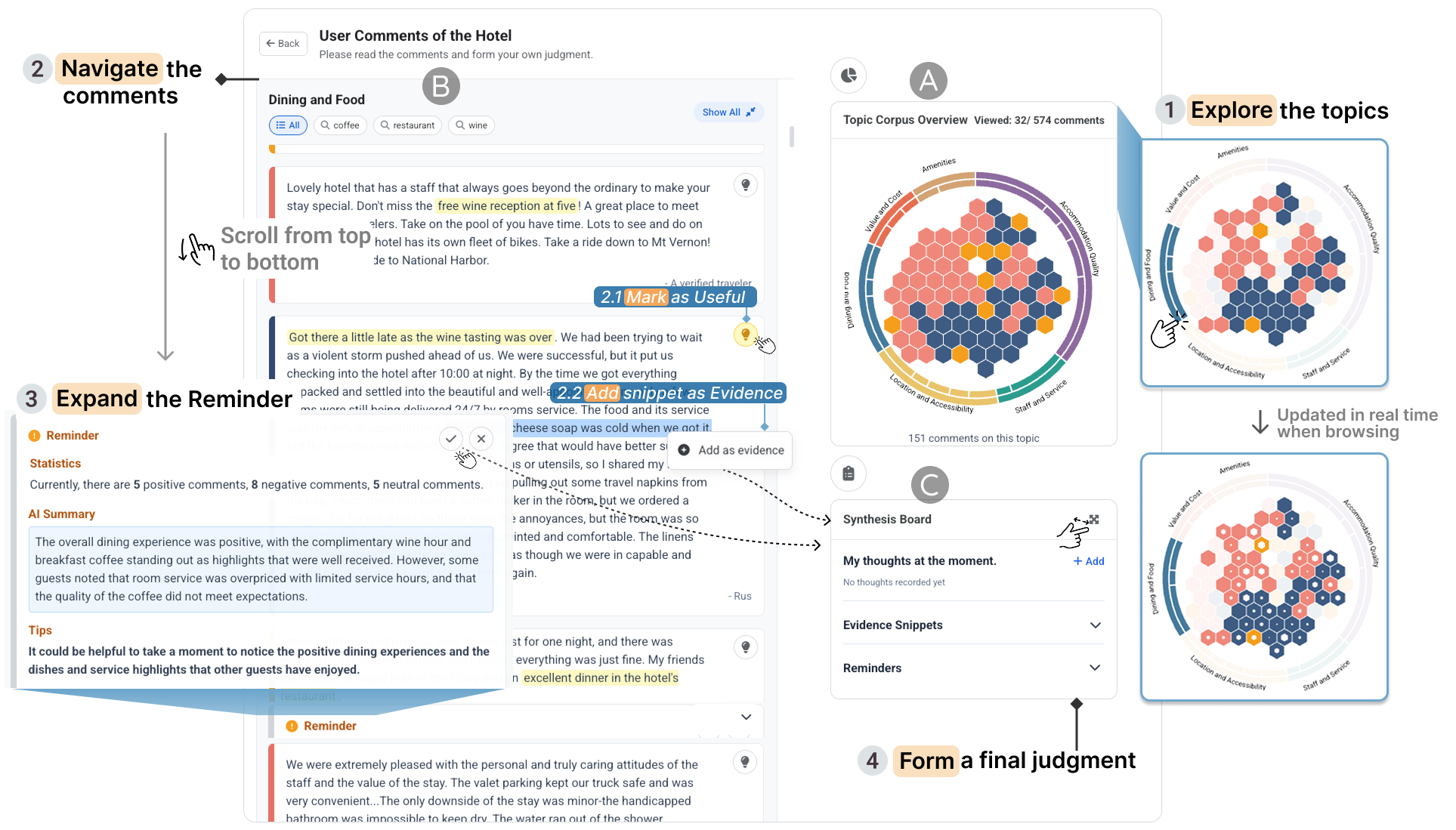 CommSense: Facilitating Bias-Aware and Reflective Navigation of Online Comments for Rational JudgmentYang Ouyang*, Shenghan Gao*, Ruichuan Wang, Hailiang Zhu, Yuheng Shao, Xiaoyu Gu, and Quan LiIn Proceedings of the 2026 CHI Conference on Human Factors in Computing Systems, , 2026
Online comments significantly influence users’ judgments, yet their presentation, often determined by platform algorithms, can introduce biases, such as anchoring effects, which distort reasoning. While existing research emphasizes mitigating individual cognitive biases, the evolution of user judgments during comment engagement remains overlooked. This study investigates how presentation cues impact reasoning and explores interface design strategies to mitigate bias. Through a preliminary experiment (N=18) and a co-design workshop, we identified key challenges users face across a four-stage process and distilled four design requirements: pre-engagement framing, interactive organization, reflective prompts, and synthesis support. Based on these insights, we developed CommSense, an on-the-fly plugin that enhances user engagement with online comments by providing visual overviews and lightweight prompts to guide reasoning. A between-subject evaluation (N=24) demonstrates that CommSense improves bias awareness and reflective thinking, helping users produce more comprehensive, evidence-based rationales while maintaining high usability.
@inproceedings{10.1145/3772318.3790530, author = {Ouyang, Yang and Gao, Shenghan and Wang, Ruichuan and Zhu, Hailiang and Shao, Yuheng and Gu, Xiaoyu and Li, Quan}, title = {CommSense: Facilitating Bias-Aware and Reflective Navigation of Online Comments for Rational Judgment}, year = {2026}, isbn = {9798400722783}, publisher = {Association for Computing Machinery}, address = {New York, NY, USA}, url = {https://doi.org/10.1145/3772318.3790530}, doi = {10.1145/3772318.3790530}, booktitle = {Proceedings of the 2026 CHI Conference on Human Factors in Computing Systems}, articleno = {484}, numpages = {30}, keywords = {Online Community, Information Seeking, Bias Awareness}, location = { }, series = {CHI '26}, } - DIS
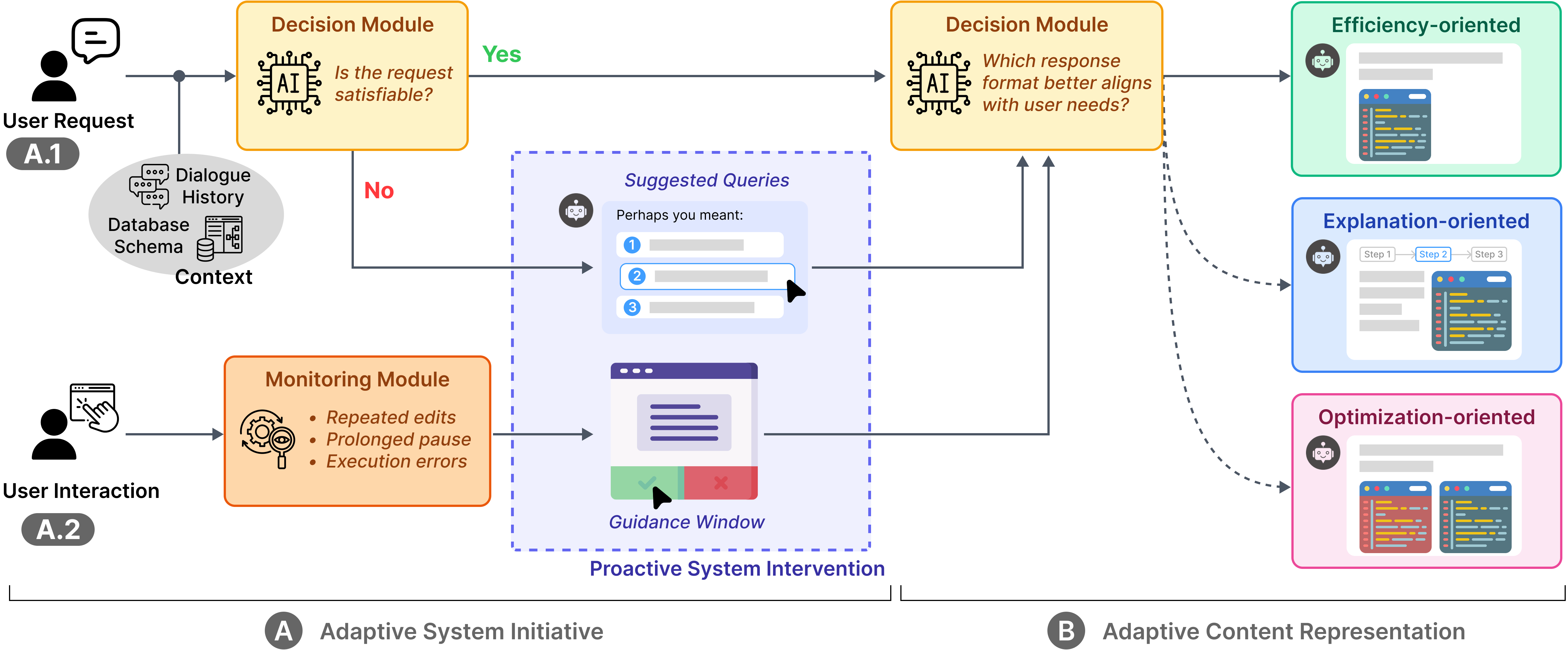 When Systems Take Initiative: A Design Framework for Adaptive, Mixed-initiative Database QueryingLongfei Chen, Shenghan Gao, Shiwei Wang, Ken Lin, Yun Wang, Yan Lu, and Quan LiIn Proceedings of the 2026 Designing Interactive Systems Conference, , 2026
Exploring databases remains cognitively demanding for non-experts. While natural language interfaces offer flexibility, they place the full burden of articulation and refinement on the user, hindering exploratory discovery. We identify a core interaction design problem: how to dynamically support users’ evolving understanding during query formulation. We propose and implement a paradigm of adaptive mixed-initiative interaction, where the system interprets user behavioral cues (e.g., tentativeness, focus shifts) to infer intent and dynamically adapts its support strategies. This involves switching between responsive and proactive modes, and integrating textual responses with graphical previews to scaffold the query-building process. We instantiate this paradigm in a functional prototype. A controlled user study demonstrates that this adaptive approach not only improves task efficiency and usability but, more importantly, reduces cognitive load and fosters a more exploratory, less formulaic query-building process compared to traditional reactive interfaces.
@inproceedings{10.1145/3800645.3812906, author = {Chen, Longfei and Gao, Shenghan and Wang, Shiwei and Lin, Ken and Wang, Yun and Lu, Yan and Li, Quan}, title = {When Systems Take Initiative: A Design Framework for Adaptive, Mixed-initiative Database Querying}, year = {2026}, isbn = {9798400725630}, publisher = {Association for Computing Machinery}, address = {New York, NY, USA}, url = {https://doi.org/10.1145/3800645.3812906}, doi = {10.1145/3800645.3812906}, booktitle = {Proceedings of the 2026 Designing Interactive Systems Conference}, pages = {1170–1187}, numpages = {18}, keywords = {Adaptive System, Database Querying, Human-AI Interaction}, location = { }, series = {DIS '26}, } - CHI EA
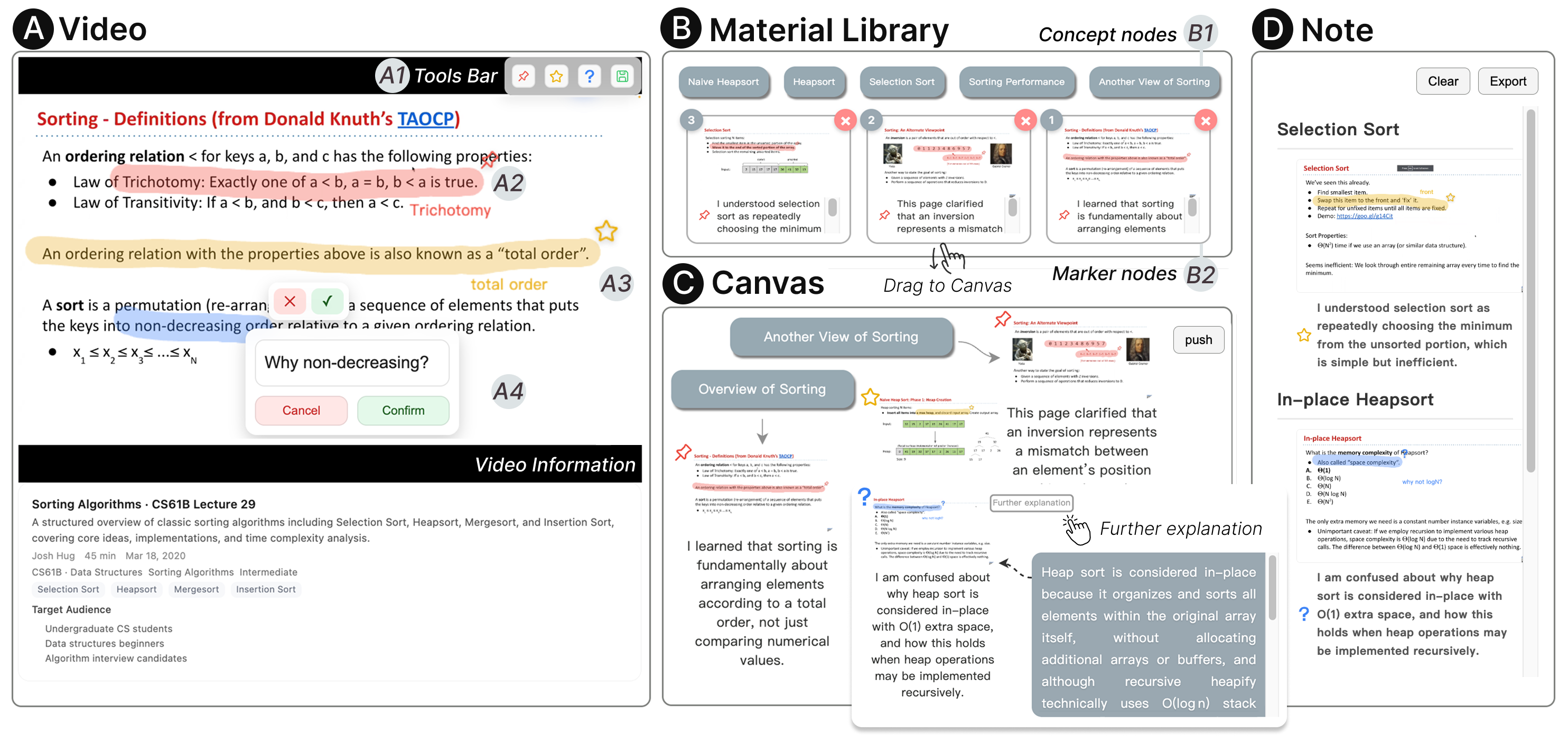 VidSense: Facilitating Incremental Externalization and Knowledge Consolidation via Canvas-Based Interactions in Video LearningYang Ouyang, Shenghan Gao, Yuheng Shao, Junjie Xiong, Xiyuan Wang, and Quan LiIn Proceedings of the Extended Abstracts of the 2026 CHI Conference on Human Factors in Computing Systems, , 2026
Instructional videos are a primary medium for acquiring complex knowledge in disciplines like software engineering and STEM, yet they often foster passive consumption and an “illusion of competence”, where learners overestimate their understanding and struggle with retention or transfer. Although “externalization” (e.g., note-taking) promotes deeper learning, supporting it during video consumption remains a challenge. Current solutions are limited: manual notetaking divides attention and increases cognitive load, while fully automated AI summaries may diminish learner engagement. Structural enhancements alone are insufficient for mastering intricate topics. To bridge this gap, we present VidSense, a video learning tool that enables learners to actively externalize, organize, and refine knowledge through AI-scaffolded co-construction. VidSense moves beyond passive watching and full automation by supporting in-situ, iterative creation of tentative and revisable learning artifacts. A preliminary user study in programming education indicates that VidSense effectively facilitates externalization, organization, and revisitation of emerging understanding during video-based learning.
@inproceedings{10.1145/3772363.3798388,
  author = {Ouyang, Yang and Gao, Shenghan and Shao, Yuheng and Xiong, Junjie and Wang, Xiyuan and Li, Quan},
  title = {VidSense: Facilitating Incremental Externalization and Knowledge Consolidation via Canvas-Based Interactions in Video Learning},
  year = {2026},
  isbn = {9798400722813},
  publisher = {Association for Computing Machinery},
  address = {New York, NY, USA},
  url = {https://doi.org/10.1145/3772363.3798388},
  doi = {10.1145/3772363.3798388},
  booktitle = {Proceedings of the Extended Abstracts of the 2026 CHI Conference on Human Factors in Computing Systems},
  articleno = {721},
  numpages = {6},
  keywords = {Video-based Learning},
  location = {
  },
  series = {CHI EA '26},
}

2025
- TVCG
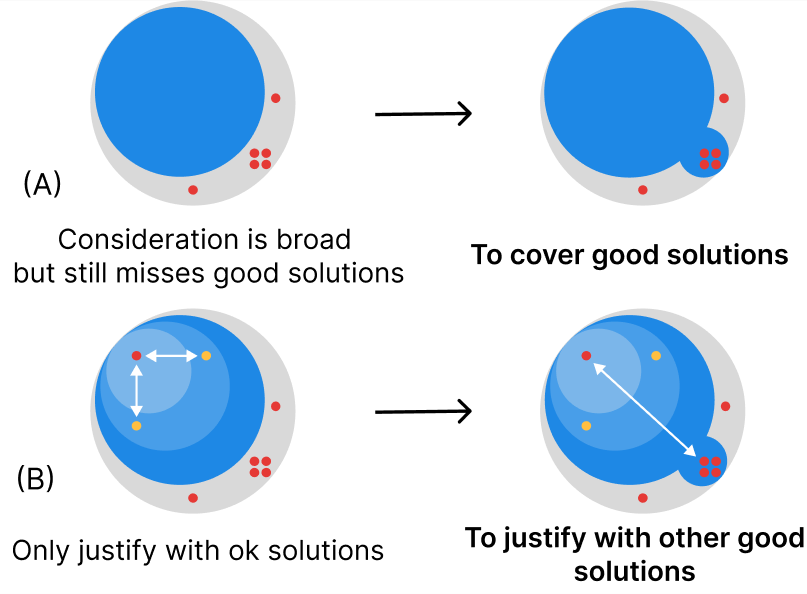 From Requirement to Solution: Unveiling Problem-Driven Design Patterns in Visual AnalyticsYuchen Wu, Shenghan Gao, Shizhen Zhang, Xiaofeng Dou, Xingbo Wang, and Quan LiIEEE Transactions on Visualization and Computer Graphics, 2025
@article{10874217, author = {Wu, Yuchen and Gao, Shenghan and Zhang, Shizhen and Dou, Xiaofeng and Wang, Xingbo and Li, Quan}, journal = {IEEE Transactions on Visualization and Computer Graphics}, title = {From Requirement to Solution: Unveiling Problem-Driven Design Patterns in Visual Analytics}, year = {2025}, volume = {}, number = {}, pages = {1-18}, keywords = {Problem-solving;Data visualization;Data models;Guidelines;Decision making;Terminology;Encoding;Computational modeling;Visual analytics;Training;Visual Analytics;Design Patterns;Problem-Solving;Typology}, doi = {10.1109/TVCG.2025.3538768}, } - UIST Demo
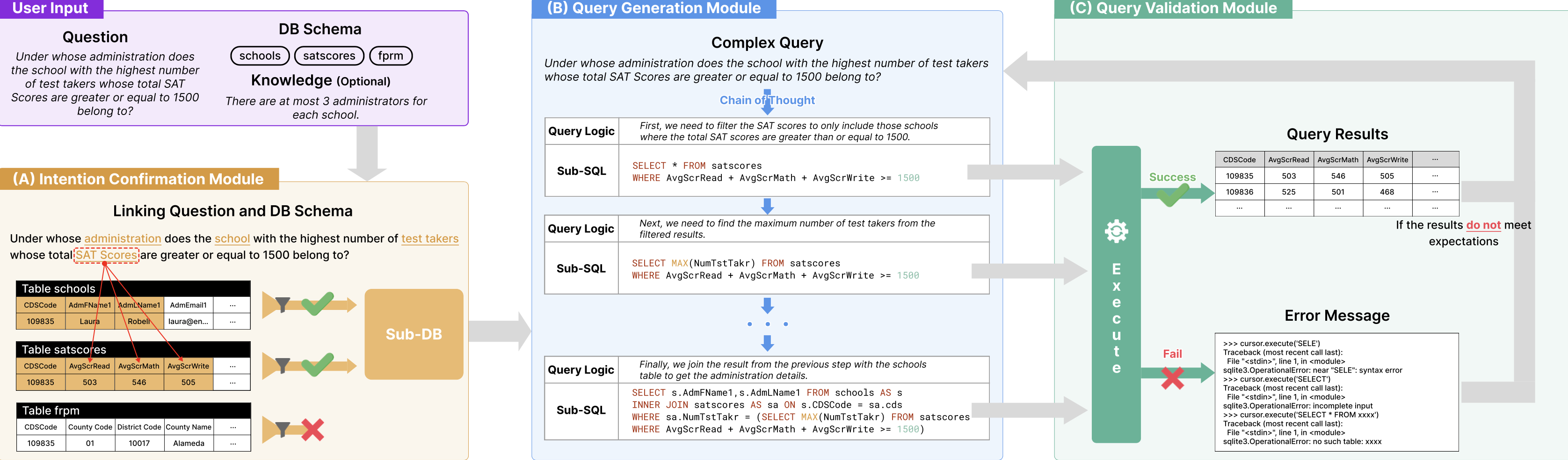 QueryGenie: Making LLM-Based Database Querying Transparent and ControllableLongfei Chen, Shenghan Gao, Shiwei Wang, Ken Lin, Yun Wang, and Quan LiIn Adjunct Proceedings of the 38th Annual ACM Symposium on User Interface Software and Technology, 2025
@inproceedings{10.1145/3746058.3758982, author = {Chen, Longfei and Gao, Shenghan and Wang, Shiwei and Lin, Ken and Wang, Yun and Li, Quan}, title = {QueryGenie: Making LLM-Based Database Querying Transparent and Controllable}, year = {2025}, isbn = {9798400720369}, publisher = {Association for Computing Machinery}, address = {New York, NY, USA}, url = {https://doi.org/10.1145/3746058.3758982}, doi = {10.1145/3746058.3758982}, booktitle = {Adjunct Proceedings of the 38th Annual ACM Symposium on User Interface Software and Technology}, articleno = {49}, numpages = {4}, keywords = {User interface, large language model, data query}, series = {UIST Adjunct '25'} } - ICWSM
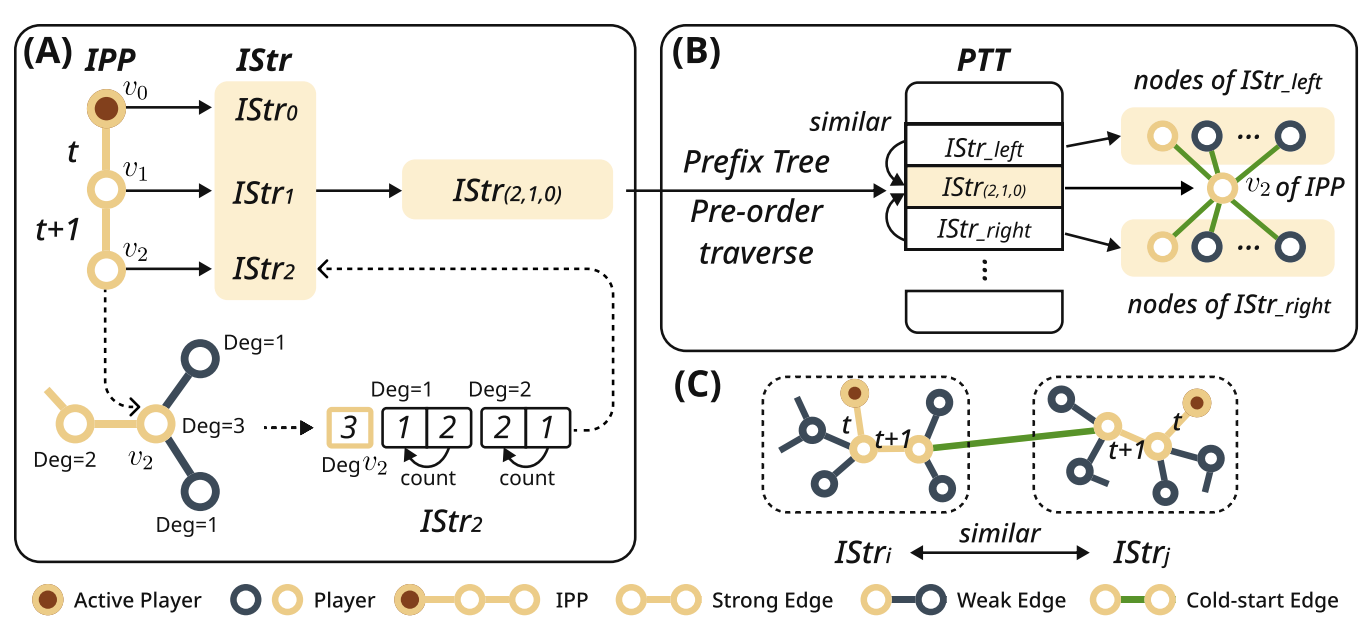 Influence Maximization in Temporal Social Networks with a Cold-Start Problem: A Supervised ApproachLaixin Xie, Ying Zhang, Xiyuan Wang, Shiyi Liu, Shenghan Gao, Xingxing Xing, Wei Wan, Haipeng Zhang, and Quan LiProceedings of the International AAAI Conference on Web and Social Media, Jun 2025
@article{xie2025influence, title = {Influence Maximization in Temporal Social Networks with a Cold-Start Problem: A Supervised Approach}, volume = {19}, url = {https://ojs.aaai.org/index.php/ICWSM/article/view/35919}, doi = {10.1609/icwsm.v19i1.35919}, abstractnote = {Influence Maximization (IM) in temporal graphs focuses on identifying influential ``seeds’’ that are pivotal for maximizing network expansion. We advocate defining these seeds through Influence Propagation Paths (IPPs), which is essential for scaling up the network. Our focus lies in efficiently labeling IPPs and accurately predicting these seeds, while addressing the often-overlooked cold-start issue prevalent in temporal networks. Our strategy introduces a motif-based labeling method and a tensorized Temporal Graph Network (TGN) tailored for multi-relational temporal graphs, bolstering prediction accuracy and computational efficiency. Moreover, we augment cold-start nodes with new neighbors from historical data sharing similar IPPs. The recommendation system within an online team-based gaming environment presents subtle impact on the social network, forming multi-relational (i.e., weak and strong) temporal graphs for our empirical IM study. We conduct offline experiments to assess prediction accuracy and model training efficiency, complemented by online A/B testing to validate practical network growth and the effectiveness in addressing the cold-start issue.}, number = {1}, journal = {Proceedings of the International AAAI Conference on Web and Social Media}, author = {Xie, Laixin and Zhang, Ying and Wang, Xiyuan and Liu, Shiyi and Gao, Shenghan and Xing, Xingxing and Wan, Wei and Zhang, Haipeng and Li, Quan}, year = {2025}, month = jun, pages = {2062-2075}, }
2023
- TVCG/VIS
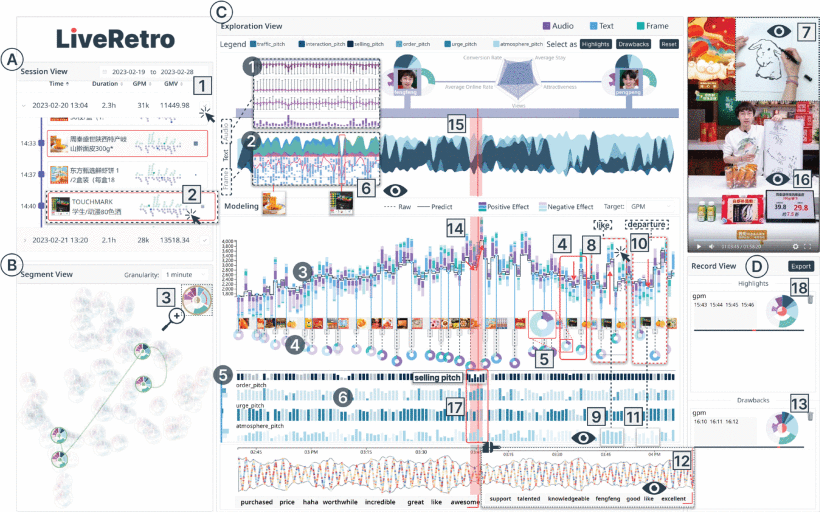 LiveRetro: Visual Analytics for Strategic Retrospect in Livestream E-CommerceYuchen Wu, Yuansong Xu, Shenghan Gao, Xingbo Wang, Wenkai Song, Zhiheng Nie, Xiaomeng Fan, and Quan LiIEEE Transactions on Visualization and Computer Graphics, 2023
@article{10295389, author = {Wu, Yuchen and Xu, Yuansong and Gao, Shenghan and Wang, Xingbo and Song, Wenkai and Nie, Zhiheng and Fan, Xiaomeng and Li, Quan}, journal = {IEEE Transactions on Visualization and Computer Graphics}, title = {LiveRetro: Visual Analytics for Strategic Retrospect in Livestream E-Commerce}, year = {2023}, volume = {30}, number = {1}, pages = {1117-1127}, keywords = {Electronic commerce;Streaming media;Visual analytics;Interviews;Forecasting;Behavioral sciences;Analytical models;Livestream E-commerce;Visual Analytics;Multimodal Video Analysis;Marketing Strategy;Time-series Modeling}, doi = {10.1109/TVCG.2023.3326911}, }